



Transportation
 Crosswalks and Pedestrian Safety: What You Need to Know From Recent Research
In recent months, news organizations have covered crosswalk construction or changes to existing crosswalks, including new, decorative pavers in Slidell, Louisiana, proposed infrastructure changes aimed at improving pedestrian safety in Phoenix, and decorative, themed crosswalks, such as rainbow crosswalks painted in towns across the country for Pride month. Such stories call attention to the dangers of pedestrians and vehicles sharing roadways -- and the rising rate of pedestrian deaths nationwide. The Governors Highway Safety Association estimates at least 7,508 pedestrians were killed as a result of crashes on U.S. roadways in 2022. more »
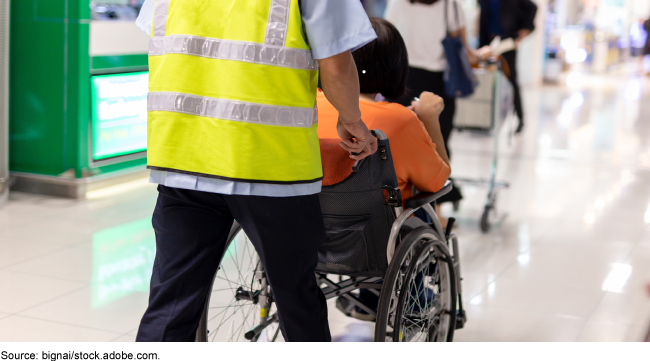 GAO (U.S. Government Accountability Office): Passengers with Disabilities; Barriers to Accessible Air Travel Remain
Based on GAO's review of regulations and information obtained from officials with the Department of Transportation (DOT) and Federal Aviation Administration (FAA), GAO found that DOT has taken steps to implement the relevant accessibility-related provisions of the FAA Reauthorization Act of 2018. For example, DOT now requires the largest U.S. airlines to report the number of wheelchairs and scooters that were transported and damaged. DOT is addressing several other provisions in the initial rulemaking processes. DOT has also taken steps to address other longstanding accessibility issues not required under the 2018 Act, but important to passengers with disabilities. In March 2022, DOT issued a proposed rule to address accessible lavatories that would apply to aircraft deliveries, to begin in 20 years. Regarding disability-related enforcement actions, DOT has taken one since 2019. more »
 A la Frank Sinatra: "Come Fly With Me", U.S. Department of Transportation Airline Customer Service Dashboard
"These ten large U.S. airlines and their regional operating partners, which operate flights for them but do not sell tickets, account for approximately 96 percent of the domestic scheduled passenger air traffic. Use the ... dashboard to learn about the amenities that the U.S. airline that you are flying on has promised to provide should there be a controllable flight cancellation or delay. You can also use the dashboard to compare amenities that the airlines commit to provide in the event of a controllable flight cancellation or delay when deciding which airline to fly." more »
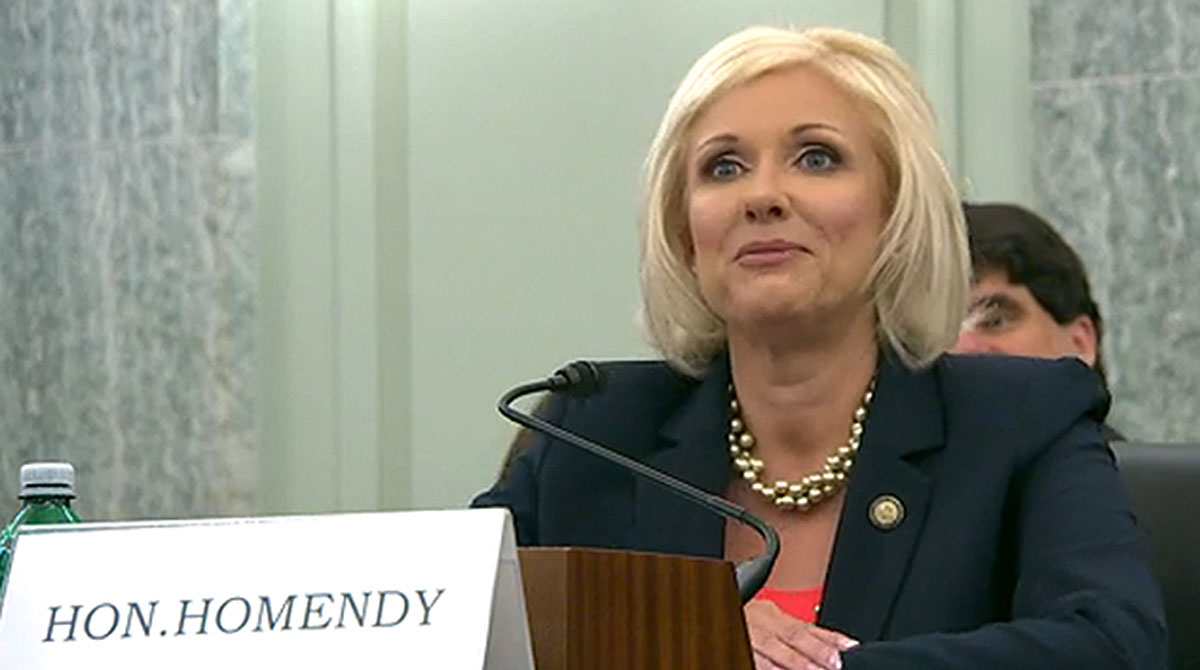 Impaired Driving and Excessive Speeding: The National Transportation Safety Board and Alcohol Impairment Detection Systems
“Technology could’ve prevented this heartbreaking crash — just as it can prevent the tens of thousands of fatalities from impaired-driving and speeding-related crashes we see in the U.S. annually,” said NTSB Chair Jennifer Homendy. “We need to implement the technologies we have right here, right now to save lives.” Requiring passive vehicle-integrated alcohol impairment detection systems, advanced driver monitoring systems or a combination of the two that would be capable of preventing or limiting vehicle operation if it detects driver impairment by alcohol. The NTSB recommends that the National Highway Traffic Safety Administration require all new vehicles to be equipped with such systems. Incentivizing vehicle manufacturers and consumers to adopt intelligent speed adaptation systems that would prevent speed-related crashes. This is a reiteration of a previous NTSB recommendation to NHTSA." more »


