


In 1952, Frankenthaler created Mountains and Sea, a seminal breakthrough painting of American abstraction. Pioneering the “stain” painting technique, she worked by pouring thinned paint directly onto raw, unprimed canvas laid on the studio floor, working from all sides to create floating fields of translucent color. Mountains and Sea was immediately influential for the artists who formed the Color Field school of painting, notable among them Morris Louis and Kenneth Noland. Thereafter, Frankenthaler remained a defining force in the development of American painting.
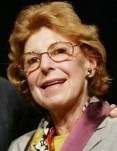
Throughout her long career, Frankenthaler experimented tirelessly, and, in addition to unique paintings on canvas and paper, she worked in a wide range of media, including ceramics, sculpture, tapestry, and especially printmaking. She was a significant voice in the mid-century “print renaissance” among American abstract painters, and in particular is renowned for her woodcuts. Her distinguished and prolific career has been the subject of numerous monographic museum exhibitions, including major retrospectives at The Jewish Museum in 1960; the Whitney Museum of American Art, and European tour, in 1969; The Solomon R. Guggenheim Museum, and tour, in 1985 (works on paper); The Museum of Modern Art, New York, and The Modern Art Museum of Fort Worth, and tour, in 1989; the National Gallery of Art, Washington, DC, and tour, in 1993 (prints); the Yale University Art Gallery, New Haven, and the Naples Museum of Art, Florida, and tour, in 2002 (woodcuts); and the Museum of Contemporary Art, North Miami, and the Royal Scottish Academy, in 2003 (works on paper).
In addition to the many scholarly essays and articles on her work by renowned art historians, curators, and critics, Frankenthaler was the subject of three monographs: Frankenthaler, by Barbara Rose (1971); Frankenthaler, by John Elderfield (1989); and Frankenthaler: A Catalogue Raisonné, Prints 1961–1994, by Suzanne Boorsch and Pegram Harrison (1996).
Important works by the artist may be found in major museums worldwide, among them the Art Gallery of Ontario, Toronto; the Art Institute of Chicago; the Los Angeles 3 County Museum of Art; The Metropolitan Museum of Art, New York; the Musée National d’Art Moderne, Centre Georges Pompidou, Paris; The Museum of Fine Arts, Boston; The Museum of Fine Arts, Houston; The Museum of Modern Art, New York; the National Gallery of Australia, Canberra; the National Gallery of Art, Washington, DC; the San Francisco Museum of Modern Art; the Solomon R. Guggenheim Museum, New York; and the Whitney Museum of American Art, New York.
“The only rule is that there are no rules. Anything is possible. … It’s all about risks, deliberate risks.”
Painting: Mountains and Sea, 1952
Oil on canvas
7' 2 5/8" x 9' 9 1/4"
National Gallery of Art, Washington
Pages: 1 · 2
More Articles
- The Guggenheim Museum Exhibits and Store in New York City; Works & Process Commissions on Tour
- Julia Sneden Wrote: Love Your Library
- Rebecca Louise Law: Awakening on View at Honolulu Museum of Art
- The Scout Report: The Art Manuals Unwrapped Podcast and Weather Puppy Smartphone App
- Annandale-on-Hudson, New York ... With Pleasure: Pattern and Decoration in American Art 1972 - 1985
- Lynn Hershman Leeson: Who Has Celebrated Her 80th Birthday and a New Exhibition, TWISTED, at The New Museum in New York City
- Explore the Royal Collection and an Exhibition, Masterpieces From Buckingham Palace
- The Autobiography of a Garden at The Huntington, a Joy for Viewers and Gardeners
- What? You Have Nothing to Do? Explore Some Museums Collections Online
- Rumors Of War by Kehinde Wiley: Monuments and Their Role in Perpetuating Incomplete Histories and Inequality


