


- The Artist’s Studio is recreated to provide insight into de Borchgrave’s creative process.
- In White showcases the purity of craftsmanship in a selection of nine dresses devoid of color.
- Papiers à la Mode features iconic looks from key periods in fashion history; gowns worn by such legendary historical figures as Elizabeth I, Madame de Pompadour, Empress Eugénie and Marie-Antoinette. Famous designers such as Charles Fredrick Worth, Paul Poiret and Coco Chanel are represented by signature pieces.
- Fortuny is an immersive environment created under a feather-light paper tent populated by recreations of Fortuny’s famed pleated and draped gowns.
- The Medici is the artist’s most extravagant series, with elaborate velvets, needlework lace, ropes of pearls, and intricate coiffures transformed into paper sculpture.
- Inspiration — During a visit the Legion of Honor in the summer of 2010, the artist selected four paintings from the museum’s European painting collection as the inspiration for her latest body of work. The paintings are: Massimo Stanzione, Woman in Neapolitan Costume, ca. 1635, Konstantin Makovsky, The Russian Bride’s Attire, 1889, Jacob-Ferdinand Voet, Anna Caffarelli Minuttiba, ca. 1675, and Anthony van Dyck, Marie Claire de Cory and Child, 1634.
Artist
Isabelle de Borchgrave is a painter by training, but textiles and costumes are her muses. Working in collaboration with leading costume historians and young fashion designers, de Borchgrave creates a world of splendor from simplest rag paper. Painting and manipulating the paper, she crafts elaborate dresses inspired by the rich depictions in early European painting or by the iconic costumes in museum collections around the world. In her work, she explores the minds of the artists who created or depicted the gowns and imagines the psyche of the women who wore them, transporting her audience to another time and place.
Though de Borchgrave’s knowledge of textile traditions is encyclopedic, she does not literally duplicate patterns. Instead she masterfully works the paper to a desired effect. With her trompe l'oeil gowns, she invites her viewers to explore her imaginary world and to create their own illusions. As de Borchgrave explains, "Although my inspiration springs from the period dresses in the great museum collections, this is just a wink at history. My work is a confluence of influences — paper, painting, sculptor, textiles, costume, illusion and trompe l’oeil."
Catalogue
The exhibition catalogue explores the exquisite paper costumes of the Belgian artist Isabelle de Borchgrave. Author Jill D’Alessandro contextualizes de Borchgrave’s work against the rich tapestry of art and couture history, examining how the artist brings long-lost fashions to life through an intricate process of tailoring, crumpling, braiding, pleating and painting paper. Luxurious reproductions of de Borchgrave’s astonishing trompe-l’oeil effects offer an intimate encounter with the work, from the austere white dresses and Papiers à la Mode to the lavish Fortuny and Medici collections. A special section focuses on the making of a new work inspired by a seventeenth-century Italian portrait in the collection of the Fine Arts Museums of San Francisco. The catalogue is available in the special exhibition Museum Store (hardback 104 pages, $29.95) or on 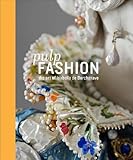
Amazon: Pulp Fashion: The Art of Isabelle De Borchgrave by Jill D'Alessandro.
Photos:
Top, Eleanor of Toledo (and snood detail) inspired by a ca. 1545 portrait of Eleanor by Agnolo Bronzino, Uffizi Gallery. Photo, Réne Stoeltie
Ruff: Marie de Medici, inspired by Pietro Facchetti portrait, Palazzo Lancellotti. Photo, Andreas von Einsiedel
Workroom: Isabelle de Borchgrave and collaborators at work on a piece based on Massimo Stanzione’s Woman in Neapolitan Costume, 2010. Photo, Courtesy Créations Isabelle de Borchgrave
Pages: 1 · 2
More Articles
- National Archives Records Lay Foundation for Killers of the Flower Moon: The Osage Murders and the Birth of the FBI
- Nichola D. Gutgold - The Most Private Roosevelt Makes a Significant Public Contribution: Ethel Carow Roosevelt Derby
- Oppenheimer: July 28 UC Berkeley Panel Discussion Focuses On The Man Behind The Movie
- Julia Sneden Wrote: Love Your Library
- Rebecca Louise Law: Awakening on View at Honolulu Museum of Art
- "Henry Ford Innovation Nation", a Favorite Television Show
- Julia Sneden Wrote: Going Forth On the Fourth After Strict Blackout Conditions and Requisitioned Gunpowder Had Been the Law
- Julia Sneden Wrote: If The Shoe Fits ... You Can Bet It's Not Fashionable
- Jo Freeman Reviews: Gendered Citizenship: The Original Conflict Over the Equal Rights Amendment, 1920 – 1963
- Jo Freeman Writes: It’s About Time


