


- Hired a victim’s advocate, who serves as the central point of contact to coordinate support of volunteer survivors. The victim’s advocate functions as a liaison between the volunteer, the post, and other offices within the Peace Corps responsible for volunteer sexual assault incident management.
- Issued new staff guidelines for responding to rape and sexual assault in February 2011. The guidelines define and clarify staff roles and responsibilities and the required steps to respond to an incident to ensure that a coordinated, compassionate response is provided to every volunteer survivor.
- Provided standardized training on new guidelines for Peace Corps staff involved in supporting sexual assault victims in February of 2011.
- Provided response training on rape and sexual assault to current PCMOs [Peace Corps Medical Officers] in continuing education sessions.”
Ms. Buller added, “We have conducted field work and interviewed staff responsible for the response and care of rape and sexual assault victims worldwide, including at eight Peace Corps posts. We will complete field work in three additional posts as part of this review and hope to issue a preliminary report at the end of next month.”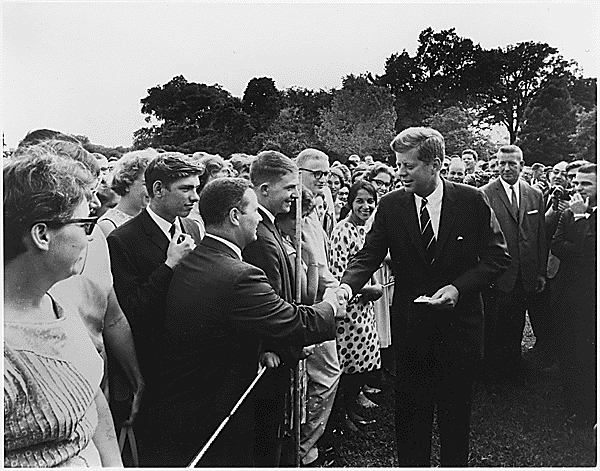
Elizabeth Odongo, training and outreach director at the DC Coalition Against Domestic Violence and a returned Peace Corps volunteer who had been stalked during her tenure in Guyana, explained, “I am here to thank the Senate for working hard to find a solution to this longstanding and systemic problem, and for passing the Kate Puzey Peace Corps Volunteer Protection Act [S. 1280], which, if ultimately enacted, will protect future volunteers from the terror and isolation that I, and so many others, have experienced. I also thank Director Williams for working with Congress, diligently and enthusiastically, in this difficult process. Thank you.” Ms. Odongo then explained the provisions of the bill and provided her expert opinion, saying, “First, this bill, championed by Senators [Barbara] Boxer [(D-CA)] and [Johnny] Isakson [(R-GA)], requires the Peace Corps to provide training in important and common sense techniques, like the buddy system and bystander response, and to institute best practices in safety and survivor response. No more volunteers will be dismissed when reporting danger or assault. They will be taken to a safe place, seen by a doctor, provided appropriate mental health care and given the opportunity to prosecute their attacker. Second, the bill creates confidentiality protocols, to ensure volunteers are not put in harm’s way for exposing danger or wrongdoing. No more volunteers will be murdered in their sleep when their perpetrators find out what they’ve reported. They will be protected. Finally, the bill creates accountability and oversight, to ensure these policies are followed. No more staff members who ignore or mistreat survivors will be re-hired or left in positions of authority. Instead, actions will be taken to ensure volunteers can trust those they must report to. You have asked me today to provide you with my professional assessment of this legislation, not just as a former volunteer and rape victim, but as a leading expert in the field of violence against women. I can tell you with confidence, as an expert, that I believe this bill is critical. It will save thousands more from the devastation that has already been suffered by too many.”
Former Senators Chris Dodd (D-CT) and Harris Wofford (D-PA), and Kevin Quigley, president of the National Peace Corps Association, also testified.
Photograph of President John F. Kennedy greeting Peace Corps volunteers, August 28, 1961. Abbie Rowe, photographer. From the National Archive.
Pages: 1 · 2
More Articles
- Congressional Budget Office: Federal Budget Deficit Totals $1.4 Trillion in 2023; Annual Deficits Average $2.0 Trillion Over the 2024–2033 Period
- 2022 Election: I Was a Ballot Chase Participant; A Part of Get Out the Vote
- Explore Presidential Papers From Hoover to Obama and Gov.info With Publications Such As 9-11 Report, Post JFK Assassination Audio & Nixon's Watergate Grand Jury Testimony
- The Bodleian Library and Worldmapper Create a Cartogram Depicting Trump's Tweets and Countries that Dominate US President's Foreign Policy
- Foiling an Elder Fraud Scam; Former FBI Director Webster Assists Investigation
- Elaine Soloway's Rookie Transplant: Therapy, Best of Both Worlds and ... Packing
- Download the Indictment: Grand Jury Indicts Thirteen Russian Individuals and Three Russian Companies for Scheme to Interfere in the United States Political System
- FAQs About the National Archives Records: Additional Documents: President John F. Kennedy's Assassination Records
- I'm Not a Pillar or a Cornerstone, Maybe I'm a Small Brick
- A C-Span Q&A With David McCullough: The American Spirit: Who We Are and What We Stand For


