


The diverse collection spans three floors of the magnificent building and contains items too numerous to list. Whether it is paintings by Canaletto or Goya, porcelain produced at Sèvres, or marquetry attributed to André-Charles Boulle it can all be found at The Bowes Museum, which has received Designated status from the government in recognition of the outstanding collection. 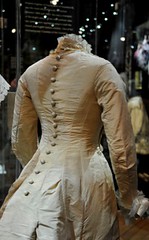
The diverse collection spans three floors of the magnificent building and contains items too numerous to list. Whether it is paintings by Canaletto or Goya, porcelain produced at Sèvres, or marquetry attributed to André-Charles Boulle it can all be found at The Bowes Museum, which has received Designated status from the government in recognition of the outstanding collection.
The Silver Swan and How It Works
The swan is life-size and is controlled by three separate clockwork mechanisms. The Silver Swan rests on a stream made of twisted glass rods interspersed with silver fish. When the mechanism is wound up, the glass rods rotate, the music begins, and the Swan twists its head to the left and right and appears to preen its back. It then appears to sight a fish in the water below and bends down to catch it, which it then swallows as the music stops and it resumes its upright position.
History of The Silver Swan
This musical automaton is much loved and over the last century has become the icon of The Bowes Museum.The Silver Swan dates from 1773 and was first recorded in 1774 as a crowd puller in the Mechanical Museum of James Cox, a London showman and dealer. The internal mechanism is by John Joseph Merlin, a famous inventor of the time.
Novelist Mark Twain also saw the Silver Swan at the Paris exhibition in 1867 and described it in his book The Innocents Abroad:
"I watched the Silver Swan, which had a living grace about his movement and a living intelligence in his eyes-watched him swimming about as comfortably and unconcernedly as it he had been born in a morass instead of a jeweller’s shop — watched him seize a silver fish from under the water and hold up his head and go through the customary and elaborate motions of swallowing it ..."
Joséphine, whose father was a clock-maker, seems to have had a fondness for automata. While the Silver Swan is the best known, there are a number of others including mechanical toys, music boxes and watches with automaton movements at The Bowes Museum. Examples include an early seventeenth century lion clock made in Germany, whose eyes swivel, and a mechanical gold mouse, circa 1810, probably Swiss.
Consider visiting the Museum's online Shop.
Images of the Silver Swan and 1880s Wedding dress are images copyrighted by the Bowes Museum; the building itself is from Wikpedia.
Pages: 1 · 2
More Articles
- Not Perhaps Too Late? A Source for Holiday Gifts You May Not Have Thought Of
- Annandale-on-Hudson, New York ... With Pleasure: Pattern and Decoration in American Art 1972 - 1985
- Survival Architecture and the Art of Resilience: Linda Gass at the Museum of Craft and Design
- Paris 1900 and the Atmosphere of the Belle Epoque Recreated, A Vibrant and Swiftly Changing City
- The Science of Knitting: Understanding How Stitch Types Govern Shape
- 275 Rare Diminutive Texts and Bindings To Be Seen From Patricia Pistner's Collection
- Spirits by Deborah Masters at the Museum of Arts and Sciences in Macon
- Chicago Institute of Art and John Singer Sargent, Georg Jensen and Arms, Armor, Medieval, and Renaissance
- Truth and Beauty: The Pre-Raphaelites and the Old Masters, “Rejecting Nothing, Selecting Nothing, and Scorning Nothing"
- A Curmudgeon's Complaint: Should There Be a Convention For the Preservation of Real Literature?


